
A Pilgrimage Across America’s Catholic Basilicas
Faith, Social Media, and America's Minor Basilicas
Newt Gingrich talks with Social Thomist founder Grady Connolly about faith, social media, and his remarkable journey to visit every minor basilica in the United States.
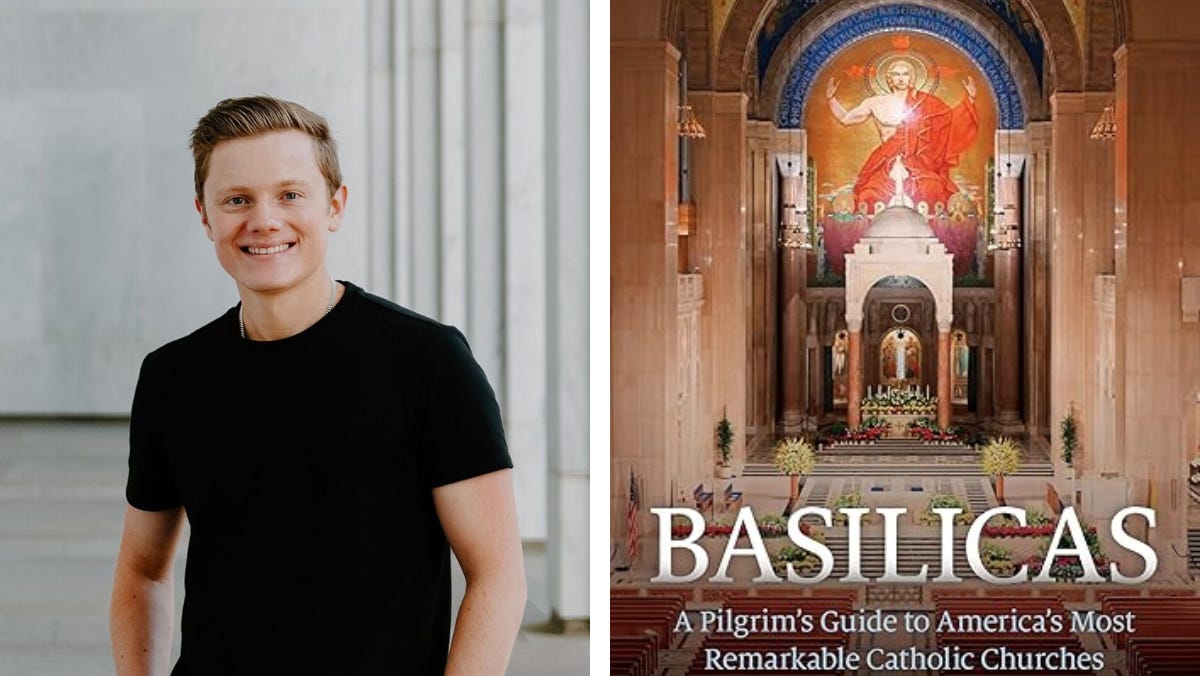
In this episode of Newt’s World, Newt Gingrich sits down with Grady Connolly, founder of Social Thomist and author of the forthcoming book Basilicas: A Pilgrim’s Guide to America’s Most Remarkable Catholic Churches. What began as a promise made during Connolly’s college years at the Basilica of the National Shrine of the Immaculate Conception evolved into a four-year pilgrimage to all 94 minor basilicas in the United States and the four major papal basilicas in Rome. Along the way, Connolly discovered not only the architectural beauty and rich history of these sacred places, but also the stories of faith, sacrifice, and perseverance that helped shape Catholic life in America.
The conversation also explores Connolly’s unique career at the intersection of faith and digital media. As the founder of Social Thomist, he has helped Catholic creators, priests, and organizations reach millions through social media, viewing online platforms as a modern mission field for evangelization. Connolly shares insights on the opportunities and challenges of the digital age, the growing demand for faith-based content, and why authentic encounters with faith must extend beyond screens and into real-world experiences. Together, he and Newt discuss the importance of purpose, community, and spiritual formation in an increasingly connected yet often disconnected culture.
Listen to their conversation below, or scroll down for an edited transcript.
Edited Transcript
This conversation has been condensed and lightly edited for clarity.
Newt Gingrich
You grew up in a small town in southern Maine and eventually earned a scholarship to attend Catholic University of America. How did that experience shape you?
Grady Connolly
My parents taught me the value of hard work and faith from an early age. When I first visited Washington, D.C., and the Basilica of the National Shrine of the Immaculate Conception, I knew I wanted to attend Catholic University. Through a series of scholarships and opportunities, I was able to make that dream a reality.
The Basilica became central to my life during college. I had made a promise that if I was able to attend Catholic University, I would visit the Basilica every day. That commitment helped deepen my faith and ultimately shaped much of what I’ve done since.
Newt Gingrich
Today, you’re the founder of Social Thomist, a company focused on helping Catholic creators and organizations reach audiences online. What inspired that mission?
Grady Connolly
I came from the social media and content creation world and began to see digital platforms as a modern mission field. People spend hours every day online searching for meaning, community, and purpose. If that’s where people are spending their time, faith needs to be present there as well.
The goal of Social Thomist is to help creators, priests, and organizations share meaningful content that brings people closer to truth and helps them discover a deeper sense of purpose.
Newt Gingrich
You often describe social media as a “digital continent.”
Grady Connolly
That’s exactly how I see it. Every generation has new frontiers. Today, millions of people live much of their lives online. The challenge is bringing goodness, truth, and human dignity into those spaces.
People are hungry for something deeper than outrage and clickbait. Faith-based content resonates because it offers hope, meaning, and a vision of purpose that many people are desperately seeking.
Newt Gingrich
Your new book chronicles your journey to all 94 minor basilicas in the United States. How did that project begin?
Grady Connolly
It started while I was in college. My original thought was that I would visit all of them over the course of my lifetime. Instead, it became a four-year pilgrimage that took me across the country.
I traveled everywhere from Maine to Hawaii, often driving long distances to visit churches in small communities. Along the way, I discovered remarkable stories of faith, sacrifice, and perseverance that helped shape Catholic life in America.
Newt Gingrich
What did you learn from the experience?
Grady Connolly
More than anything, I learned that faith requires action. Pilgrimage isn’t simply travel, it’s a journey that changes you.
The long drives, quiet moments of prayer, and time for reflection created opportunities to think deeply about purpose and vocation. I also developed a greater appreciation for America and the role faith played in building communities throughout the country.
Newt Gingrich
Were there particular basilicas that stood out?
Grady Connolly
The Cathedral Basilica in St. Louis is one of the most beautiful churches I’ve ever visited. I was also deeply moved by the Basilica of St. Fidelis in rural Kansas, which stands as a testament to the faith and determination of immigrant families who sacrificed to build a place of worship.
Those stories are repeated all across America and became one of the most inspiring aspects of the project.
Newt Gingrich
One of the themes throughout your work is that faith must move beyond the screen.
Grady Connolly
Absolutely. Online content can inspire people, but it should ultimately lead them into real-world experiences.
Watch the videos. Listen to the podcasts. Read the books. But then go on pilgrimage, visit a church, spend time in prayer, and build community. The goal isn’t simply to consume content. The goal is to live it.
Newt Gingrich
Grady, thank you for joining me.
Grady Connolly
Thank you, Mr. Speaker. It’s been a pleasure.
About the Guest
Grady Connolly is the founder and president of Social Thomist, a Catholic social media company working with clergy, theologians, and lay apostolates who share the mission of giving glory to God and drawing people nearer to Jesus Christ.
You can manage your subscription preferences to choose the updates, newsletters, and alerts you want to receive on the website.


