


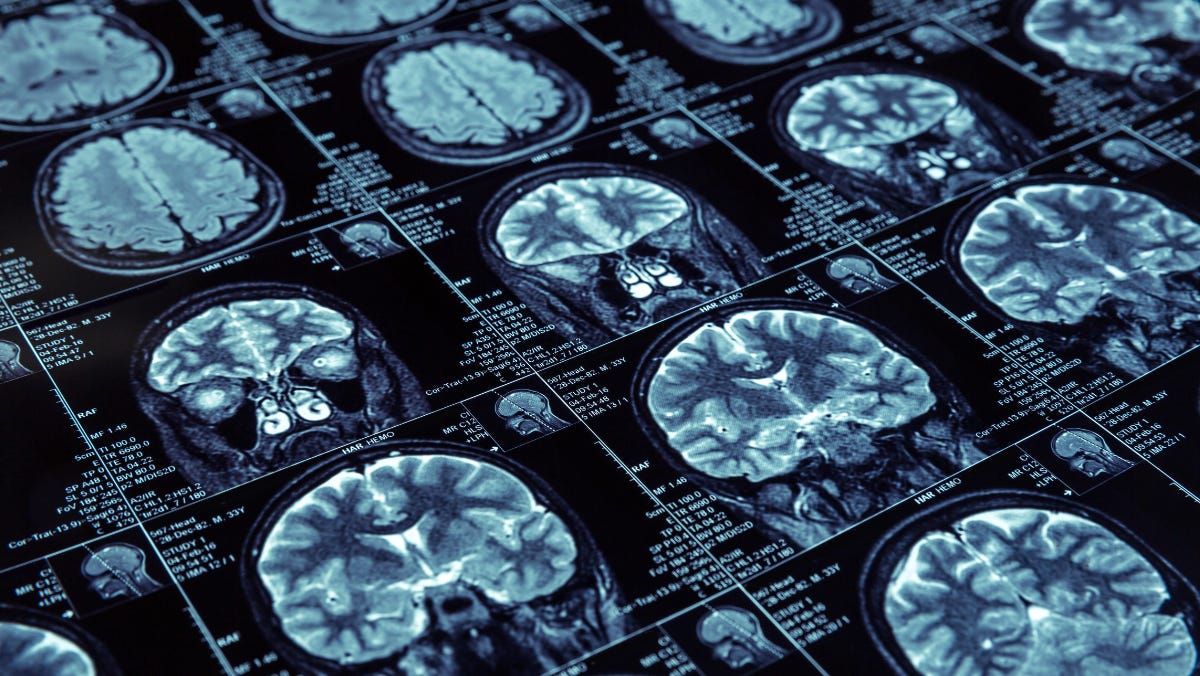
Newt Gingrich talks with Dr. Robert Redfield and Dr. Brent Beasley about breakthroughs in Alzheimer’s detection and treatment and the policy changes needed to bring them to patients.
For decades, an Alzheimer’s diagnosis offered patients and their families few options beyond preparing for the disease’s progression. That reality is beginning to change. New blood-based biomarkers can help identify Alzheimer’s before clinical dementia develops, while emerging treatments may slow its progression. For Dr. Brent Beasley, a physician diagnosed with Alzheimer’s at just 57, early detection and treatment became deeply personal. After cognitive decline cost him his medical career, a blood biomarker test helped lead to his diagnosis and treatment. Today, he describes a future for Alzheimer’s patients filled with far more possibility than existed even a decade ago.

Former CDC Director Dr. Robert Redfield believes this scientific progress demands an equally significant change in public policy. Drawing on lessons from the fight against HIV/AIDS, he argues that America must move from waiting for symptoms to routinely identifying Alzheimer’s earlier, expanding access to available treatments, and accelerating the development of new therapies. With millions of Americans already living with the disease and millions more family members affected as caregivers, the question is no longer simply whether science can change the trajectory of Alzheimer’s. It is whether Congress, CMS, and the health care system can move quickly enough to take advantage of the breakthroughs already underway.
Listen to their conversation below, or scroll down for an edited transcript:

Edited Transcript
This conversation has been condensed and lightly edited for clarity.
Newt Gingrich
Alzheimer’s disease is quietly becoming one of the greatest public health and fiscal challenges this country has ever faced. More than seven million Americans live with Alzheimer’s today, a number projected to nearly double to almost 14 million by 2060. Its reach extends far beyond patients themselves, touching millions of family members and caregivers.
For decades, this was a disease we could only watch unfold. That is starting to change. We now have blood testing that can help diagnose Alzheimer’s, along with treatments that can slow its progression.
The science has arrived. The question is whether our policy and health care system can keep up.
Today, I’m joined by two guests who bring very different and equally essential perspectives. Dr. Robert Redfield, former director of the CDC, sees striking parallels between the federal response needed for Alzheimer’s and the one he helped lead against HIV/AIDS. Dr. Brent Beasley is a physician who spent his career treating patients, including those with Alzheimer’s, until, at 57, he became one himself.
Dr. Redfield, just how big a crisis is Alzheimer’s disease for the United States?
Dr. Robert Redfield
It’s a significant problem for two reasons. First is the number of individuals who suffer from Alzheimer’s, which I think is really underappreciated. The FDA has staged Alzheimer’s into three stages, with stage three being clinical dementia and stages one and two being preclinical.
Second, Alzheimer’s doesn’t just affect the patient. It also requires caregivers. The economic impact of Alzheimer’s over the next decade or two is going to be enormous.
That’s why we’ve become such strong advocates for early diagnosis. There are interventions we have now, including non-pharmaceutical interventions that have been shown to delay progression. There are also pharmaceutical interventions, with new ones on the horizon.
I think it’s important that doctors routinely evaluate brain function for those of us over 50, just as they evaluate our hearts, lungs, and kidneys.
Newt Gingrich
Brent, tell us about your experience with early diagnosis and what is happening with the science that makes it so valuable.
Dr. Brent Beasley
I had a career as an academic general internist, researcher, and teacher of medical students and residents. After I had a mild case of COVID-19 in 2022, my three grown children began asking my wife, Cindy, “What’s wrong with Dad?”
We initially thought it might be COVID fog.
Then, in August 2023, while I was seeing patients, my supervising physician sat me down and fired me. She had been monitoring my performance and was worried about me.
Afterward, a friend suggested I go to the University of Kansas Alzheimer’s Disease Research Center. He had ordered a blood test called P-Tau 217. That marker suggested I probably had Alzheimer’s.
Additional testing confirmed it. I began treatment with lecanemab, known by the trade name Leqembi.
Dr. Robert Redfield
There was a paper published in JAMA that really highlighted the importance of the P-Tau 217 test. It gives us an opportunity to identify people who are at significant risk of developing clinical dementia years before it occurs.
That’s important because we now have interventions that can be used earlier.
If we can delay the onset of clinical dementia by five or 10 years, that could be the ballgame for many people.
Newt Gingrich
Brent, because you’re a medical doctor and understood what the diagnosis meant, how did you deal with it emotionally?
Dr. Brent Beasley
Not well. It was devastating. It upended our whole household.
My wife became the main breadwinner while continuing a career she is passionate about. Alzheimer’s is an incredibly difficult thing for families to navigate.
I’m thankful there was a medication available to treat my disease. After being treated, I remember coming away from serving as a deacon at church, turning to my wife and saying, “I’m back.”
She said, “I could tell.”
That was a great day for us.
Newt Gingrich
Years ago, I co-chaired a task force on Alzheimer’s. One reason it was difficult to get people interested in early diagnosis was that there wasn’t much we could do.
That has changed dramatically.
We may now be entering a period in which breakthroughs in early detection and intervention could create breathtaking human and financial savings.
Dr. Redfield, what do we have to do to make that happen?
Dr. Robert Redfield
First and foremost, CMS has to recognize that routine diagnosis of Alzheimer’s needs to become standard practice.
We now have blood testing available. I believe people over 50 should be tested and should also receive standardized evaluations of cognitive function.
The next thing that needs to happen involves access to treatment. CMS currently requires coverage with evidence development, or CED, for certain Alzheimer’s treatments. That creates an additional administrative burden for physicians and can restrict patient access.
I think CMS needs to remove that restriction and allow physicians who believe these drugs are indicated for their patients to prescribe them.
Those are things I’d like to see happen yesterday.
Newt Gingrich
You spent much of your career dealing with HIV/AIDS, from a period when the diagnosis was terrifying to a period when patients can live normal lifespans. Do you see a parallel with Alzheimer’s?
Dr. Robert Redfield
Yes, I do.
Initially, people didn’t want to diagnose HIV infection. I was very aggressive in promoting early diagnosis because I believed early diagnosis was good.
When my patients came to me in 1982, they had less than a year of survival. Today, they can live a natural lifetime.
Once the pharmaceutical industry understood the extent of the HIV problem, it brought the power of science to the field and revolutionized treatment.
I believe the same thing will happen with Alzheimer’s.
We have to get more people diagnosed, routinely evaluate cognitive function, and provide easier access to the drugs available now. Once we understand the full extent of the disease, I think we’ll also accelerate the development of better treatments.
Newt Gingrich
If you could address a joint session of Congress, CMS, NIH, and HHS, what are the biggest policy changes you would advocate?
Dr. Robert Redfield
The first is a central principle of medicine: Early diagnosis is good.
We have to promote early diagnosis.
Second, I would have CMS pay for blood-based testing for people over 50.
Third, people should have an evaluation of their mental function as part of their regular medical care.
Fourth, CMS should remove the CED requirement that is blocking access to treatment.
I’d also like Congress to stimulate the private sector to pursue new therapeutic advances in Alzheimer’s and have HHS seriously focus on developing care delivery systems that actually work for people with the disease.
Dr. Brent Beasley
I would add the ASAP Act. It is a bill in Congress that could help people with Alzheimer’s gain access to Medicare earlier and make these kinds of treatments more affordable.
Newt Gingrich
The earlier we can treat people and maintain their cognitive capabilities, the greater the impact not only on the patient but on their families.
Brent, after everything you’ve experienced, are you optimistic?
Dr. Brent Beasley
I’m very excited about what the future holds for those of us who have been diagnosed with Alzheimer’s and those who will be diagnosed.
We have an aging population, and we need to be ready for what is coming.
But we’re living in an age that is unparalleled in possibility. The things we’re discovering about Alzheimer’s, how to treat it, and the medications on the horizon give me enormous hope.
Dr. Robert Redfield
There are some very exciting drugs in Phase III trials right now.
If we can get people diagnosed and understand their stage of Alzheimer’s, we can prepare for success. Pharmaceutical companies can understand the size of the need and prepare manufacturing capacity so patients can access new drugs when they are proven effective.
Newt Gingrich
There is an act in the House and Senate called the ASAP Act, which would create a Medicare pathway for FDA-cleared blood-based biomarkers. There are already 240 House and Senate members co-sponsoring the bill.
I hope people who hear this podcast will call their senators and House members.
Alzheimer’s is an enormous challenge, and its impact extends well beyond those who have the disease.
Brent, what would you say to a person or family receiving an Alzheimer’s diagnosis today?
Dr. Brent Beasley
We’re living in an age that is unparalleled in possibility.
I’m very hopeful about the medications being developed and what we are learning about treating Alzheimer’s.
There are people throughout medicine and industry who care deeply about solving this. It isn’t simply about money. There is a passion to save loved ones.
I’m very hopeful that we will have even better drugs than we have now.
Newt Gingrich
That willingness to stay engaged is important. Having a medical doctor who is also a patient gives the rest of us a sense of hope.
This conversation has strengthened what has been an almost 30-year commitment for me. The idea of tackling Alzheimer’s with greater intensity and speed, while cutting through bureaucratic red tape, is a cause worth pursuing.
Thank you both for joining me.
Dr. Robert Redfield
Thank you for having us.
Early Detection and Alzheimer’s Risk
Newt Gingrich
How do you determine whether you or a loved one has an Alzheimer’s disease risk? What early signs should people watch for?
Dr. Robert Redfield
I want to identify it before symptoms.
The FDA has classified Alzheimer’s into three stages, and in stage one there can be no symptoms.
The best way we have right now to understand whether you may be at risk of developing symptomatic Alzheimer’s is through biomarker testing such as P-Tau 217.
If you wait until someone is experiencing memory problems, word-finding problems, recall problems, or concentration issues, the disease has already progressed.
I want to shift the focus away from waiting for symptomatic Alzheimer’s and toward identifying the disease at the earliest possible point.
Newt Gingrich
We don’t require someone to have a heart attack before we begin working on their cardiovascular health.
Maybe that is the right analogy for the brain. We want to intervene so early that we never quite get to the problem.
Dr. Robert Redfield
That’s a very appropriate analogy.
If you were at risk of a heart attack, we would tell you to eat better, sleep better, and exercise. We now have evidence that these kinds of non-pharmaceutical interventions can also help delay the onset of clinical Alzheimer’s.
Newt Gingrich
What are some of the routines people can follow?
Dr. Brent Beasley
I encourage people to eat a healthy diet, including plenty of fruits and colorful vegetables.
The other thing is aerobic exercise. It can be difficult to get outside our comfort zones and do the exercise we need, but it’s important.
Dr. Robert Redfield
I would also add good sleep patterns.
Dr. Brent Beasley
I discovered I had obstructive sleep apnea and now use a CPAP. It has been a game changer for me, along with the medications I’m taking for Alzheimer’s.
Newt Gingrich
What strikes me is how much the world of Alzheimer’s has changed.
There was a time when learning about the disease early offered relatively little opportunity to change its course. Today, we are beginning to have tools for earlier detection, treatments that can make a difference, and promising new therapies on the horizon.
The challenge now is ensuring that our institutions change as quickly as the science.

About the Guest
Dr. Robert Redfield served as director of the Centers for Disease Control and Prevention during the first Trump administration. Before leading the CDC, he spent two decades in the U.S. Army Medical Corps and played a significant role in HIV/AIDS research and treatment. He later co-founded the University of Maryland’s Institute of Human Virology. He has become an advocate for applying lessons from America’s response to HIV/AIDS to the growing challenge of Alzheimer’s disease.
Dr. Brent Beasley is a retired internal medicine physician, researcher, and medical educator who spent years caring for patients before receiving his own Alzheimer’s diagnosis at age 57. His disease was identified through blood biomarker testing and additional diagnostic testing, allowing him to receive treatment relatively early. He now speaks publicly about his experience and the possibilities emerging from advances in Alzheimer’s detection and treatment.

You can manage your subscription preferences to choose the updates, newsletters, and alerts you want to receive on the website.