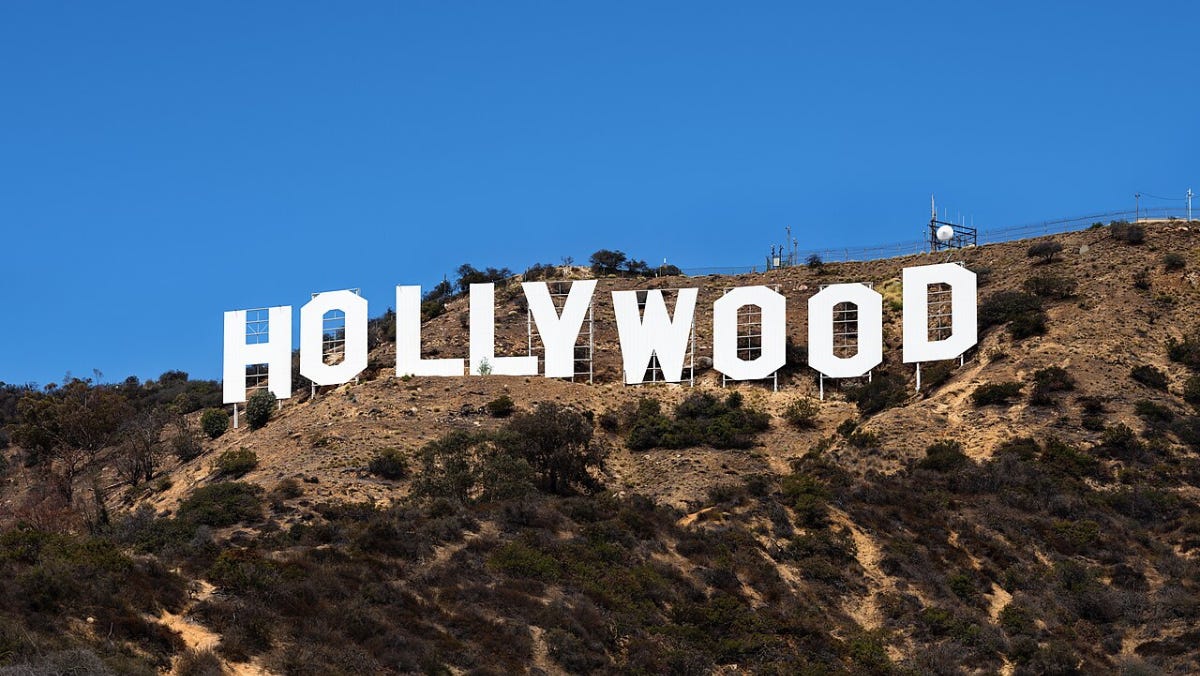
Can Hollywood Become American Again?
Rebuilding American filmmaking.
Newt Gingrich talks with Chris Fenton about China's influence on Hollywood, rebuilding American film production, and the push to bring movie-making jobs back to the United States.
For decades, Hollywood chased international markets by moving production overseas and reshaping content to satisfy foreign audiences. On this episode of Newt's World, Newt Gingrich is joined by longtime entertainment executive and producer Chris Fenton, who reflects on his own role in helping American studios pursue the Chinese market and explains why he now believes that strategy came at a tremendous cost. Fenton discusses how roughly sixty percent of American film and television production now takes place outside the United States, contributing to the loss of thousands of jobs and weakening one of America's most influential industries.
The conversation also examines a growing bipartisan effort to restore film production in the United States through a national production incentive. Fenton explains why he produced Bad Counselors entirely with American financing, cast, crew, and locations, and argues that a modest federal incentive could help bring productions back home, strengthen local economies, support American workers, and reinforce America's cultural influence around the world.
Listen to the episode below, or scroll down for an edited transcript.
Edited Transcript
This conversation has been condensed and lightly edited for clarity.
Newt Gingrich
Welcome to Newt’s World. My guest is Chris Fenton, a longtime Hollywood executive and producer whose career has included building entertainment partnerships between the United States and China. Today, we’re discussing why he now believes Hollywood’s global strategy has come at a significant cost to American jobs, American storytelling, and America’s cultural influence.
Chris Fenton
For years, we believed opening markets like China would create jobs here while spreading American values abroad. Looking back, I think that strategy was misguided. In many cases, Hollywood reshaped productions and even storylines to satisfy Beijing in exchange for access to its market.
Newt Gingrich
How much of that involved outright censorship versus proactively changing films to avoid offending Chinese officials?
Chris Fenton
Both happened. Sometimes scenes were removed after films were finished. More concerning was the self-censorship before production even began, where studios intentionally changed plots or messaging to appeal to Chinese authorities.
Newt Gingrich
At the same time, America has lost tens of thousands of entertainment jobs as production has moved overseas. How did that happen?
Chris Fenton
Today roughly 60 percent of film and television production occurs outside the United States. Other countries aggressively compete using national tax incentives, lower costs, and favorable policies. America simply isn’t competing on a level playing field.
Newt Gingrich
Historically, films have always been made around the world. What’s different now?
Chris Fenton
The difference is scale. More than 80 countries now offer national production incentives. Combined with currency advantages and government support, it often becomes significantly cheaper to produce films abroad than here at home.
Newt Gingrich
Your newest film, Bad Counselors, was produced almost entirely in America. Why make that decision?
Chris Fenton
We wanted to prove it could be done. The movie used American financing, American crews, American talent, and American locations. It cost slightly more, but we believe audiences increasingly value products that are proudly made in America.
Newt Gingrich
You also argue that keeping productions here creates long-term benefits.
Chris Fenton
Absolutely. States benefit because productions hire local workers, support small businesses, and strengthen permanent filmmaking infrastructure. Those investments remain long after filming ends.
Newt Gingrich
You’re working with a coalition seeking a federal production incentive. What would that accomplish?
Chris Fenton
The proposal simply adds a modest federal incentive on top of existing state programs. That additional support would make the United States competitive again and help keep productions—and jobs—here.
Newt Gingrich
This isn’t just about Hollywood, is it?
Chris Fenton
Not at all. Film production supports more than 122,000 businesses across all 50 states, many of them small businesses like hotels, restaurants, equipment suppliers, transportation companies, and local contractors.
Newt Gingrich
American entertainment has also been a major export.
Chris Fenton
It has generated billions in trade surplus while projecting American culture around the world. But we’ve also helped other countries build their own industries, reducing America’s share of those markets.
Newt Gingrich
If Congress adopts this proposal, what could the industry look like ten years from now?
Chris Fenton
I believe we’d bring a substantial amount of production back home, create more American jobs, strengthen our domestic film industry, and restore some of America’s cultural influence through stories produced by American creators.
Newt Gingrich
Chris, thank you for joining me and for sharing your perspective on rebuilding American filmmaking.
About the Guest
Chris Fenton is a longtime Hollywood executive, producer, and author. He previously served as President of DMG Entertainment, where he pioneered major co-productions between American and Chinese studios. During his career, he has produced more than 25 films that have grossed over $2 billion worldwide and later led Media Capital Technologies, helping finance major studio productions. Fenton is the author of Feeding the Dragon: Inside the Trillion Dollar Dilemma Facing Hollywood, the NBA, and American Business, serves as the John H. Mitchell Professor at the University of Southern California, advises Congress on issues related to China, and regularly contributes to RealClearPolitics, CNN, and other publications.
You can manage your subscription preferences to choose the updates, newsletters, and alerts you want to receive on the website.