


Newt Gingrich Talks with Rainmaker CEO Augustus Doricko About Cloud Seeding, Water Scarcity, and the Technology That Could Transform the American West
As drought conditions intensify across much of the United States, policymakers, farmers, utilities, and communities are searching for new ways to secure reliable water supplies. On this episode of Newt’s World, Newt Gingrich sits down with Augustus Doricko, founder and CEO of Rainmaker Technology Corporation, to explore a technology that has fascinated scientists for decades: cloud seeding. Doricko explains how advances in drones, weather modeling, radar systems, and artificial intelligence are allowing his company to enhance snowfall and precipitation while measuring results with a level of precision that was previously impossible.
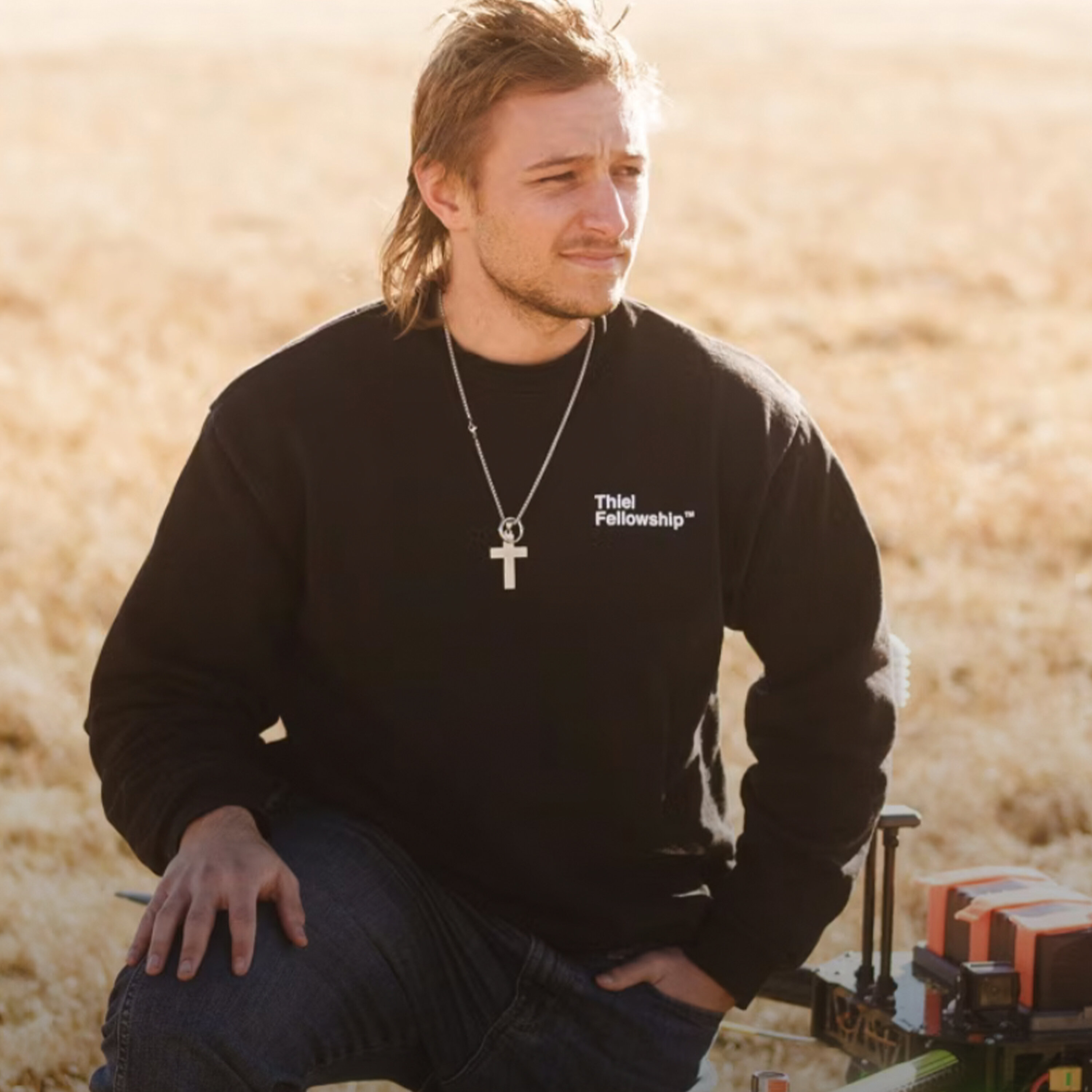
Their conversation examines the growing challenges facing America’s water infrastructure, from declining river flows and depleted aquifers to increasing demand across the West. Augustus argues that innovation, rather than scarcity, should define the nation’s response. He outlines Rainmaker’s ambitious vision for increasing water availability, supporting agriculture, and helping communities adapt to a drier future. Newt challenges him on the environmental, economic, and practical implications of weather modification, creating a fascinating discussion about whether technology can play a meaningful role in solving one of America’s most pressing resource challenges.
Listen to their conversation below, or scroll down for an edited transcript.
Edited Transcript
This conversation has been condensed and lightly edited for clarity.
Newt Gingrich
Augustus, you’re one of the youngest CEOs working in climate and water technology. How did you become interested in this issue?
Augustus Doricko
I was studying physics at UC Berkeley and later started a groundwater business in Texas. Through that work, I realized the American water system is facing serious long-term challenges. Conservation matters, but it is not enough on its own. We need to find ways to increase water supply.
As I researched solutions, I became fascinated by cloud seeding. The technology has existed since the 1940s, but the major challenge was proving whether the precipitation created was actually manmade. Advances in radar, satellites, and weather measurement changed that. Once researchers demonstrated that cloud-seeded precipitation could be measured and verified, I realized this could become a scalable source of water.
Newt Gingrich
One question people immediately ask is whether creating rain in one area means taking water away from somewhere else.
Augustus Doricko
It’s a common concern. There is a finite amount of water in the atmosphere at any given time, but most atmospheric moisture never precipitates over productive land. Much of it eventually returns to the oceans.
Our goal is to target clouds that otherwise would not produce meaningful precipitation. In those cases, we are creating additional usable water rather than simply redistributing existing rainfall.
Newt Gingrich
Cloud seeding has been around for decades. What technological changes have made it more effective today?
Augustus Doricko
The biggest breakthrough is measurement. Modern radar and satellite systems allow us to distinguish between natural and manmade precipitation.
In addition, drones have dramatically reduced costs and improved safety compared to traditional aircraft. We can operate in difficult weather conditions without putting pilots at risk. Finally, advances in computing and artificial intelligence help us identify which clouds are most likely to produce the greatest results.
Newt Gingrich
How serious is the current drought situation across the United States?
Augustus Doricko
The situation is significant. Major water systems, including the Colorado River Basin and important groundwater aquifers, are under increasing pressure.
The challenge is not only reduced rainfall but also long-term depletion of underground water reserves. If aquifers are drawn down too far, some of that storage capacity can be permanently lost.
Newt Gingrich
How much difference could cloud seeding realistically make?
Augustus Doricko
The potential impact is substantial. The Colorado River Basin receives enormous amounts of precipitation each year. Even modest increases in snowfall and precipitation across key areas could significantly increase river flows and improve water availability.
Our goal is to help reverse long-term water shortages and provide additional supply for communities, agriculture, and industry.
Newt Gingrich
Rainmaker uses drones rather than airplanes. Why?
Augustus Doricko
Safety and economics.
Traditional cloud seeding requires pilots to fly in difficult winter conditions near mountain ranges. Drones eliminate that risk.
They are also far less expensive to operate. That lowers the cost of producing water and makes large-scale deployment more practical.
Newt Gingrich
Some people worry about the materials used in cloud seeding, particularly silver iodide. Are there health concerns?
Augustus Doricko
The scientific evidence shows that concentrations used in cloud seeding are extremely low.
After decades of monitoring, researchers have found levels far below thresholds associated with environmental or health impacts. The amounts involved are measured in parts per trillion, making them extraordinarily small.
Newt Gingrich
Where do you see this technology going over the next decade?
Augustus Doricko
My hope is that weather modification becomes an important tool for increasing water availability throughout the American West.
If we continue improving the technology, we can help make regions more resilient, support agriculture, and address growing water shortages. Longer term, I believe there is tremendous potential for using weather technology to improve environmental outcomes on a much larger scale.
Newt Gingrich
It’s certainly an ambitious vision. Augustus, thank you for joining me.
Augustus Doricko
Thank you. I appreciate the opportunity.
About the Guest
Rachel Campos-Duffy is the host of America’s #1 rated cable news morning show, FOX & Friends Weekend. With her husband, Sean Duffy, she co-wrote the #I New York Times bestseller All American Christmas. She is also the author of the patriotic children’s book Paloma Wants to be Lady Freedom. Campos-Duffy has a bachelor’s degree in economics from Arizona State University’s Honors Program and a master’s degree in international affairs from the University of California, San Diego.
She is married to the Secretary of Transportation and former Wisconsin Congressman Sean Duffy. They are parents to nine children and grandparents to two grandchildren.
You can manage your subscription preferences to choose the updates, newsletters, and alerts you want to receive on the website.