



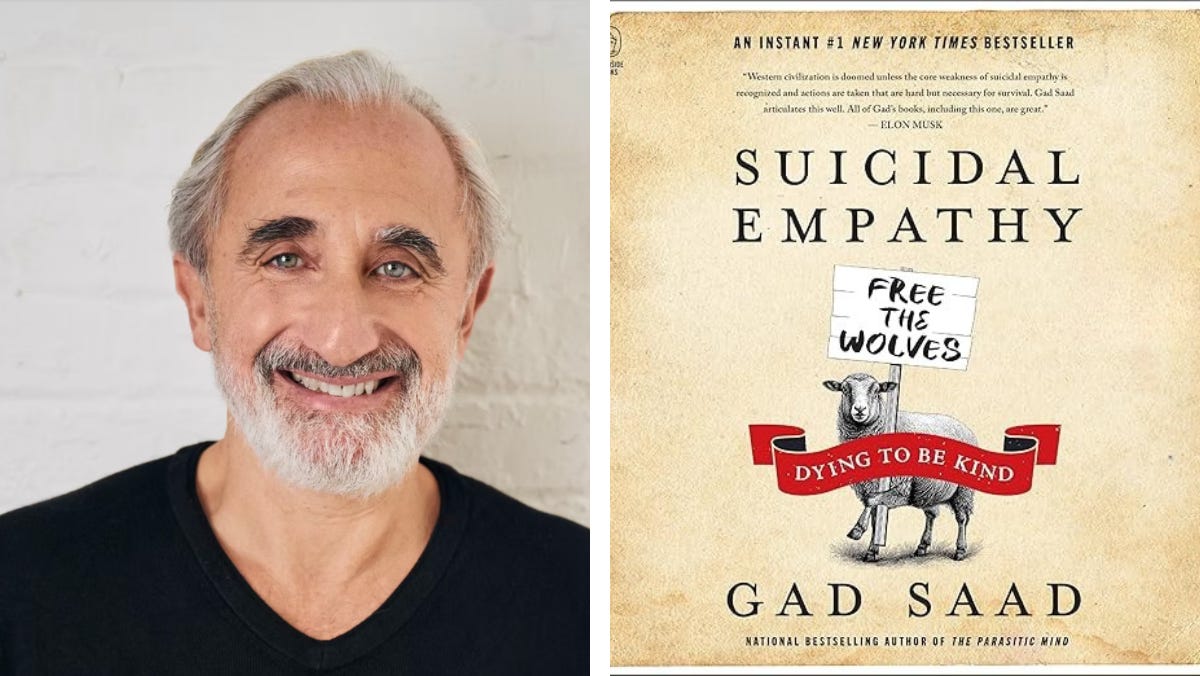
Newt talks with bestselling author Dr. Gad Saad about why empathy without judgment can become destructive and how it is shaping some of the most contentious debates facing Western societies today.
On this episode of Newt’s World, Newt is joined by Dr. Gad Saad, scholar at the Declaration of Independence Center for the Study of American Freedom at the University of Mississippi and author of the New York Times bestselling book Suicidal Empathy: Dying to Be Kind. Saad argues that while empathy is an essential human virtue, it can become dangerous when detached from reason, accountability, and reality.
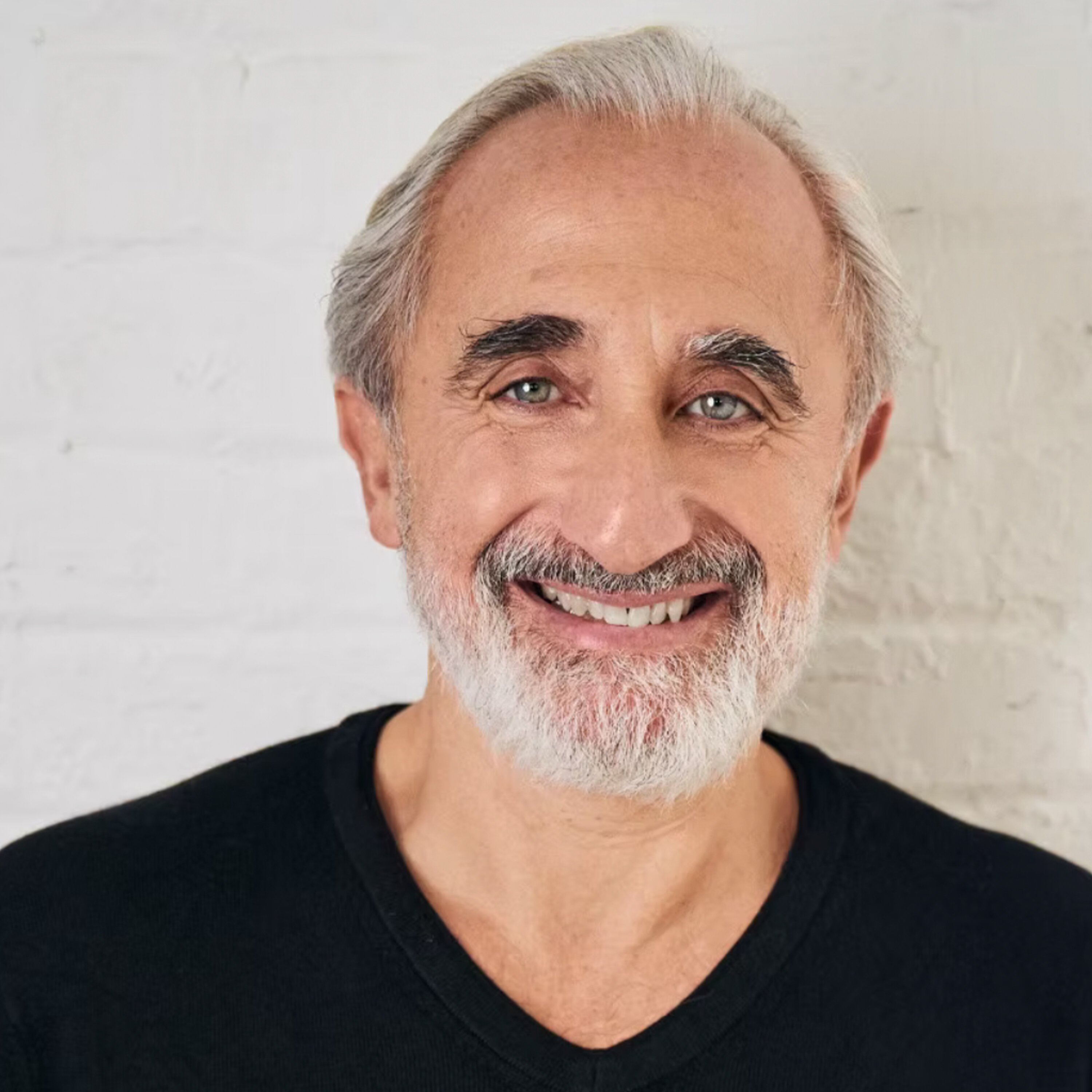
Their conversation explores how what Dr. Saad calls “suicidal empathy” influences modern debates surrounding immigration, crime, homelessness, education, and public policy. Drawing on his background in evolutionary behavioral science, Dr. Saad explains why societies must balance compassion with practical judgment and why ignoring human nature often leads to failed policies.
They also discuss the growing influence of cultural relativism and postmodernism within Western institutions, the challenges facing higher education, and the consequences of abandoning foundational principles that sustain free societies.
As Western nations grapple with questions of identity, governance, and cultural cohesion, Dr. Saad argues that preserving freedom requires both moral clarity and the willingness to confront difficult realities.
Listen to their conversation below, or scroll down for an edited transcript.
Edited Transcript
This conversation has been condensed and lightly edited for clarity.
Newt Gingrich
Your new book, Suicidal Empathy: Dying to Be Kind, debuted at number one on the New York Times nonfiction bestseller list. Why do you think the book has resonated with so many readers?
Dr. Saad
Empathy is an important virtue, but like any virtue, it can become harmful when taken to an extreme. Human beings are social creatures and empathy helps us understand one another. The problem arises when empathy is applied indiscriminately or elevated above all other considerations. That’s what I call suicidal empathy.
Newt Gingrich
How does suicidal empathy show up in public policy?
Dr. Saad
One example is immigration. If you begin with the assumption that all cultures are equally compatible with Western democratic values and that it’s wrong to evaluate differences in assimilation or cultural compatibility, you lose the ability to make sound policy decisions.
Newt Gingrich
You argue that societies can eventually undermine their own foundations when they stop making those distinctions.
Dr. Saad
Exactly. Free societies depend on shared principles and values. The United States is exceptional because of the ideas it was built upon. If large numbers of people reject those principles, the institutions that support freedom become increasingly difficult to sustain.
Newt Gingrich
You also connect this concept to issues like homelessness and crime.
Dr. Saad
Many modern policies are rooted in the belief that individuals have little personal responsibility for their circumstances. While external factors matter, removing accountability entirely often prevents meaningful solutions. Compassion and responsibility should work together, not against each other.
Newt Gingrich
Your personal experiences clearly influence your perspective. You grew up in Lebanon during the early years of the civil war.
Dr. Saad
Yes. My family left Lebanon after the war began. Experiencing instability firsthand gives you a different appreciation for freedom. Many immigrants understand how rare and valuable stable democratic institutions really are because they’ve seen what happens when those institutions fail.
Newt Gingrich
You’ve spent decades in academia. When do you think higher education began moving in the wrong direction?
Dr. Saad
Many of the ideas we’re debating today—cultural relativism, postmodernism, and various forms of identity-based thinking—began in universities decades ago. These ideas often start in academic settings before gradually spreading into politics, media, and public life.
Newt Gingrich
Your work challenges people to reconsider some of the assumptions driving modern policy debates. Thank you for joining me.
Dr. Saad
Thank you. It’s always a pleasure.
About the Guest
Gad Saad, PHD, is a professor and an evolutionary behavioral scientist. He has authored numerous scientific papers and pioneered the use of evolutionary psychology in marketing and consumer behavior. In addition to his scientific work, he is a leading public intellectual who often writes and speaks about idea pathogens that are destroying logic, science, reason, and common sense. He is the host of The Saad Truth podcast, and his book The Parasitic Mind: How Infectious Ideas Are Killing Common Sense became an international bestseller.
You can manage your subscription preferences to choose the updates, newsletters, and alerts you want to receive on the website.

