
The Bold New Space Plan for Freedom’s Future
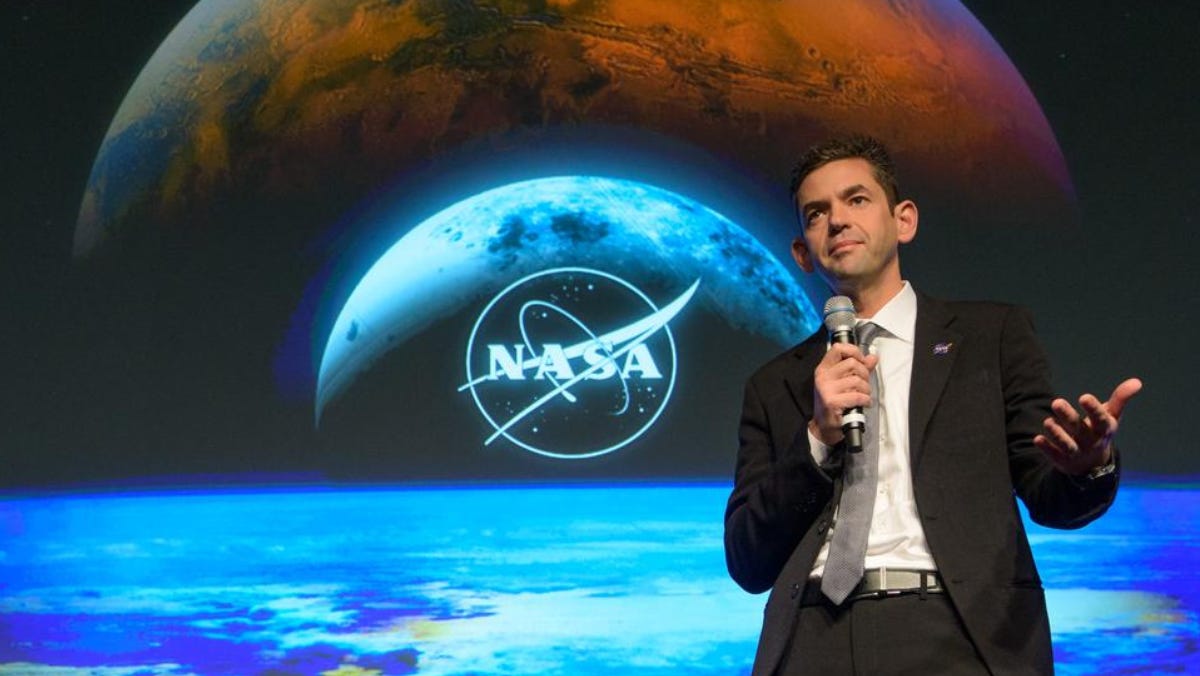
President Trump’s vision of a Golden Age of Exploration and Innovation has been outlined in the new NASA Plan.
On March 29, the leadership at NASA held a 55-minute briefing to discuss remarkably bold and decisive changes in its plans for moving America and the cause of freedom into space.
This was an exciting moment, because it returned NASA to the dynamic path President Donald J. Trump had established in his first term. Sadly, President Joe Biden slowed down the commitment to American leadership in space. Four years were lost that could have accelerated the Trump vision of dynamic American leadership in space on behalf of freedom.
The Chinese did not have a four-year Biden detour. As a result, China is much closer to competing with us in space than it was at the end of the first Trump administration. As NASA’s extraordinary new administrator, Jared Isaacman, said, “The clock is running in this great-power competition, and success or failure will be measured in months, not years.”
America is fortunate to have Isaacman at NASA’s helm. He is a brilliant developer of companies and a billionaire. He proved his commitment to space by personally paying to go into orbit twice — and he became the first civilian to do a space walk outside the space station.
Isaacman has brought the combination of his entrepreneurial skills as a leader and his passion for space into an extraordinary effort to overhaul NASA and dramatically accelerate America’s ability to lead in space.
Many space enthusiasts (myself included) have been concerned about the Space Launch System for years. It was far too expensive. Its technology was obsolete. It could never achieve the frequency of launches a healthy Moon and Mars program would require.
For years, the SLS has been sustained by lobbyists and politicians despite its failure to meet schedules, cost agreements, and performance metrics.
To his credit Isaacman has taken the problem head on and announced a process that will rapidly move our efforts on the Moon and Mars to newer technologies and companies such as SpaceX and Blue Origins.
Isaacman is giving the SLS four opportunities to help move us into the Moon between now and 2028. However, he has standardized its deployment and reduced the cost and the complexity dramatically.
President Trump’s vision of a Golden Age of Exploration and Innovation has been outlined in the new NASA Plan.
One of the key steps toward an accelerated Moon program is the decision to eliminate the Gateway Orbital Lunar station. This would have been an expensive system. It would have needed to be carried up from earth — and its logistics chain would have been complicated and costly.
Many of the most pro-space advocates were thrilled when Isaacman announced that NASA would skip the orbital system and go straight to the surface of the Moon, where it would develop a permanent American presence on our nearest neighbor.
Isaacman is proposing a $20 billion project to establish Americans on the Moon with sufficient depth to be able to grow a real colony — with real manufacturing and scientific potential. There, they will work to turn lunar ice into hydrogen fuel, which will power future trips to Mars. This is just one example of the kind of historic projects which will become possible once we have a constant presence.
The other major component Isaacman’s leadership is the commitment to build nuclear rockets capable of higher speeds and longer trips than chemical rockets. Chemical rockets are effective in putting things in orbit. They can carrying things to the Moon or on one-way trips to Mars. However, to really go beyond the Moon on a routine basis, a nuclear-powered propulsion system is much faster and would make getting to Mars and beyond a much simpler challenge.
This is a bold new vision of a much more dynamic America in space. It deserves the support of every American. If we are going to stay ahead of China in reaching out into the solar system, this is the kind of leadership which will make a huge difference.
You can manage your subscription preferences to choose the updates, newsletters, and alerts you want to receive on the website.


