
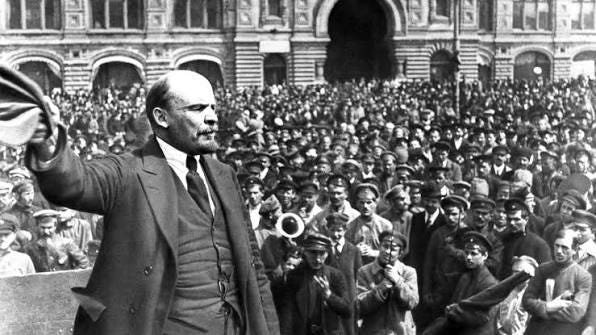
When the Bolsheviks were a fringe faction in February 1917, Vladimir Lenin was in exile. Practically no one in Russia believed they could form a government. When the Czar fell, the army and the provisional government revealed their inability to hold the space they previously occupied. At that time a small, disciplined minority did not require overwhelming support to take it. The Bolsheviks required an opportunity and a willingness to act in the face of dissatisfaction, and by October of 1917 they had all three.
A century later, another movement watches another party struggle to maintain its political relevance, and this movement is wasting little time seizing its opening.
What is that opening?
Let’s look at the Democratic Party ahead of the 2026 midterms; one must conclude that it is a coalition on its last legs. Internal approval ratings among its base are low. Working-class voters have been steadily defecting for a decade. Establishment Democrats are struggling to raise funds for campaigns. An unprecedented number of successful, high-profile renomination campaigns have been defeated — not by centrists, but by figures carrying the endorsement of the Democratic Socialists of America. The party establishment, preoccupied with other matters, has left the field open to an organization with a specific goal in mind, and the machinery to achieve it.
The machinery itself is the real difference between the DSA and its opponents. Unlike any other group, the DSA boasts unparalleled organization, with an emphasis on door-to-door canvassing and slate-building. It enjoys a constant flow of dues-paying, youthful members willing to turn out, turn up, and run in every low-turnout primary while the establishment waits until the general election to put up a winner. The Bolsheviks, too, had no need of a majority consensus with the people. They only needed to occupy the right committees at the right time and place while the rest of the country was looking for its next meal. The same principle applies to both movements: A small, focused group can overwhelm one as large and diffuse as the Democratic Party at exactly the right time
Meanwhile, on the slogan front, the Bolsheviks were also innovators. They identified what the people wanted, bread, and what they were willing to fight for: an end to the war. They built their campaign around simple, catchy slogans which encapsulated a far-reaching revolutionary program. The same technique has since been employed by the DSA, which has seen success promoting itself under slogans such as “Medicare for All,” “Tax the Rich,” and “Housing is a Human Right.” While each plank can stand alone as a campaign issue, together they form the opening statements for a platform that includes the nationalization of key industries, a rewriting of the U.S. Constitution, and a general rejection of the market as a guiding principle for any sector of the economy – Big Government Socialism
New York Congresswoman Alexandria Ocasio-Cortez’s decision to renew her DSA membership this month, as the party debates the makeup of its 2028 presidential ticket, fits a similar pattern. Movements tend to consolidate behind a single figure as the heir apparent at precisely the moment when that heir begins to understand his or her usefulness to the party. AOC spent seven years as the most famous socialist in the country without bothering to renew her DSA card, because she didn’t need to. As the party weighs its options, its internal dissidents will soon realize the movement cannot grow without a unifying presence, and Ocasio-Cortez knows this. So, too, does she recognize an opportunity when it comes along. As the DSA’s primary-friendly candidates begin to see more success at the state level, it is only natural that she would renew her card.
Any analysis of the parallels between the Russian Revolution and the current state of American politics would be remiss if it failed to consider the material conditions which allowed for the establishment of Bolshevik rule. At the time of the October Revolution, there was little in the way of a state apparatus to dismantle. The Russian bureaucracy was largely intact, but without the Czar at its center, it quickly became obsolete. However, the same principle applies to establishing a revolutionary government anywhere, at any time. The parallels with a Democratic Party with no central figure as a leader and its struggles to crystallize a counterargument to the Republican Party are difficult to ignore.
A Welsh politician once remarked that to cast an enemy out it is first necessary to embrace him. Arguing this was exactly why Big Government Socialist sought alliances with the Liberal Party in the UK: not as genuine partners, but as a tactic to absorb and then discard them
For all their faults, the Democrats have long been seen as a progressive big-tent party, willing to accept and incorporate any reasonably popular idea. The new socialist left, by contrast, favors centralized control of the economy as a guiding principle, and an aggressive, uncompromising approach to reshaping the U.S. economy and political system.
While the Bolsheviks did not formally adopt this approach until several years after they seized power, the logic was necessarily present in all their actions in office. The new socialist economy, run on fixed prices and strict regulations, was always a matter of when, not if. The DSA calls for redrafting a new Constitution and eradicating the Supreme Court, Senate, and the Presidency.
Like the Bolsheviks, they say they aren’t looking to make these changes today.
Not today, but soon.
You can manage your subscription preferences to choose the updates, newsletters, and alerts you want to receive on the website.


The socialists are leaning farther left in an effort to follow the democrats as the better alternative once the Democrats have screwed up society to the point where the majority of voters want a change. The party has done this effectively in NY. I’m skeptical about a city run by organized crime and whether they’ve had a legitimate election but, if they did socialist took over and are now doing the bidding of organized crime in NY anyway. Ironically, the city will see a Muslim socialist in charge on 9/11’s 25th anniversary. I wonder how many people voted for that?